As a nationally recognized high-tech enterprise, we focus on the research, development, production, and sales of cutting-edge medical devices.
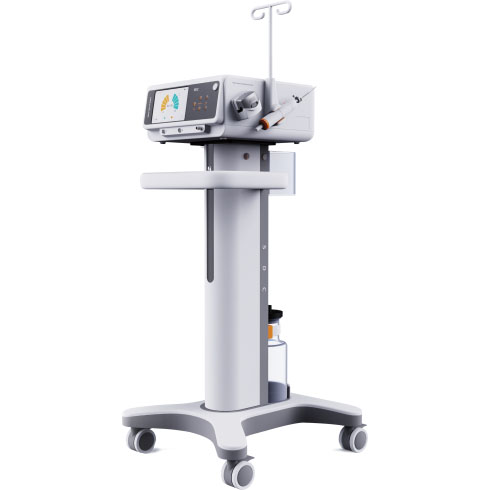
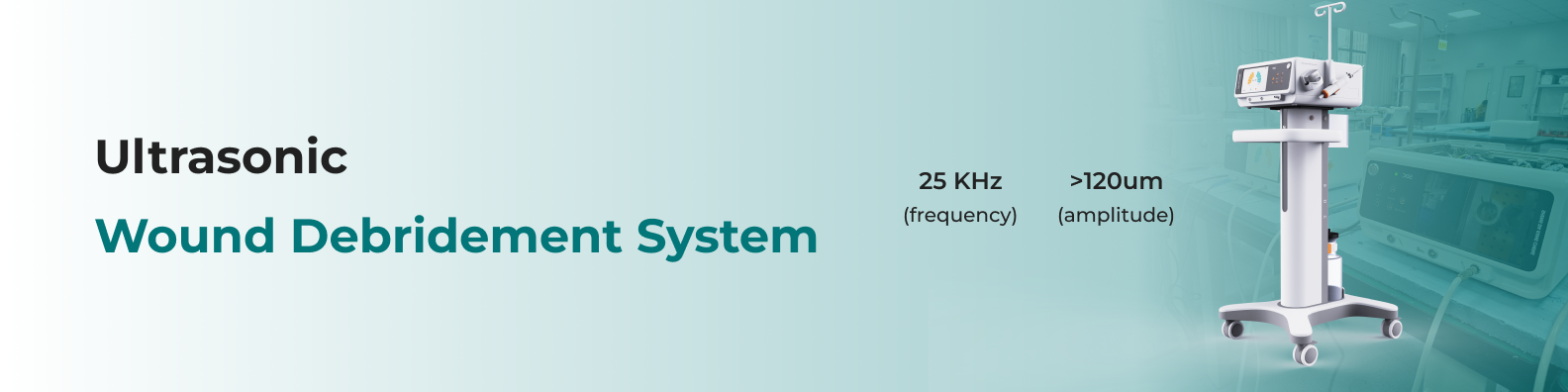
Ultrasonic Wound Debridement System
A much safer way to promote wound healing
Key Features
- VIBRATION FREQUENCY: 25KHZ
- PROBE AMPLITUDE: >120MM
- PATENTED FLUID PATHWAY
- PNEUMATIC WOUND CLEANSING
Advantages
- Selective debridement Remove necrotic tissue without damaging healthy tissue
- Reduce bio-burden Effectively eliminates bacteria and biofilms
- Improve cell activity Promote granulation growth
- Painless debridement Well tolerated by patients
- User-Friendly Operation Simple enough for nurses to perform with ease
| Feature | Ultrasonic Debridement | Sharp/Surgical Debridement |
|---|---|---|
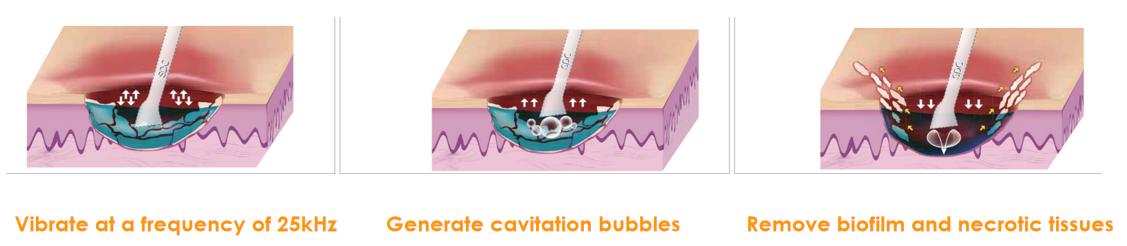
| Primary Mechanism | Low-frequency sound waves creating microbubbles (cavitation) and microstreaming. | Physical cutting with scalpel, scissors, curette, forceps. |
| Selectivity | Highly selective. Primarily targets non-viable, necrotic tissue and biofilm. | Less selective. Relies on clinician's eye and touch to differentiate tissue. |
| Pain & Anesthesia | Often painless or minimal discomfort. Usually requires no anesthesia. | Can be painful. Often requires local, regional, or even general anesthesia. |
| Bleeding | Low-frequency ultrasound is hemostatic (promotes clotting), so minimal bleeding. | Causes bleeding by cutting into viable tissue. Bleeding is expected. |
| Biofilm Removal | Excellent. Acoustic microstreaming is highly effective at disrupting and removing biofilm. | Fair to Good. Can physically remove biofilm, but difficult to see and remove all microscopic remnants. |
| Antimicrobial Effect | Yes. The irrigation fluid can be antimicrobial, and the process itself disrupts bacteria. | No inherent antimicrobial effect. |
| Primary User | Wound care nurses, physical therapists, podiatrists (in clinic settings). | Physicians (especially surgeons, podiatrists), advanced practice providers, some specialized nurses. |
| Clinical Application | Outpatient clinics, bedside, long-term care facilities. | Operating room, procedure rooms, bedside (limited). |
Frequently Asked Questions (FAQs)
Ultrasonic debridement is generally less painful than traditional sharp surgical debridement. The need for anesthesia depends on the patient's pain tolerance and the type of wound.
For diabetic foot ulcers and pressure sores, many patients experience peripheral neuropathy, reducing pain sensitivity. In such cases, anesthesia is often unnecessary.
For burns or other painful wounds, anesthesia may be required if the patient cannot tolerate the procedure. Pain can be assessed by applying moderate pressure to the wound.
Reducing ultrasound power and contact force may decrease pain but can compromise debridement effectiveness.
Spatula-type probe: Ideal for most open wounds. Its rectangular working end concentrates energy for high efficiency and can be used with a splash guard. Recommended for most wound types.
Double-ball probe: Suitable for undermining, sinus tracts, and hard-to-reach wounds. Its spherical shape allows debridement without requiring direct visibility.
Hoof-type probe: Best for large, flat wounds. Similar to the spatula-type but with a front tip for scraping.
High-temperature, high-pressure, or ethylene oxide disinfection is recommended. Immersion disinfection is theoretically possible but must comply with local regulations and hospital protocols.
Only the ultrasonic working probes and pneumatic irrigation handle can be immersed.
The ultrasonic handle and wire are not immersion-compatible.
We are now seeking to expand our international presence by establishing a strategic partnership with a reputable agent. We aim to collaborate with a partner who shares our vision of advancing healthcare through state-of-the-art medical technologies. This partnership will enable us to deliver our advanced wound care solutions to healthcare providers, thereby enhancing patient care and clinical practices.